
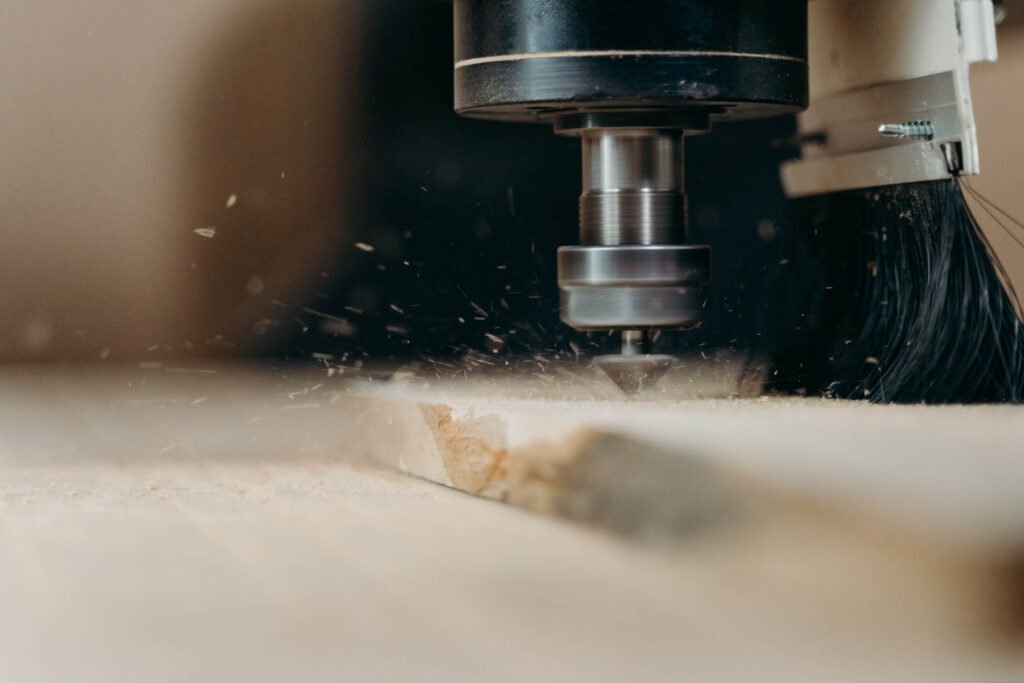
A CNC router, short for Computer Numerical Control router, which is simply a computer-controlled cutting machine used for various precision machining tasks, particularly in woodworking, metalworking, and plastics fabrication. CNC routers are highly versatile and are employed in both industrial and hobbyist settings. Here’s how they work and what they’re used for:
How CNC Routers Work:
Computer Control: CNC routers are controlled by computer programs or software. These programs, turn CAD technical drawings into CAM, which contain the design specifications, including the shapes, dimensions, and cutting path as numbers & letters, referred to as GCode, that instruct the machine where and how to cut.
Machine Translation: The computer program translates the design specifications into a series of precise coordinates and instructions, which are sent to the CNC router’s control system.
Motorized Movement: CNC routers have motors that move along three axes: X (horizontal), Y (horizontal perpendicular to X), and Z (vertical). These motors precisely follow the instructions provided by the computer program, moving the router’s cutting tool accordingly.
Cutting Tool: The cutting tool on a CNC router can vary depending on the material being worked. Common tools include router bits for wood and plastic, that cut, chamfer, engrave or milling cutters for metal. The tool is attached to the spindle and is capable of moving in multiple directions to achieve intricate cuts and shapes with micro millimeter accuracy.
Material Fixation: The material to be cut or shaped is firmly fixed to the CNC router’s worktable or bed. This ensures stability and accuracy during the machining process.
Precision Machining: As the CNC router’s cutting tool moves according to the program’s instructions, it precisely cuts, carves, drills, or engraves the material with high accuracy, repeatability, and speed.
Applications of CNC Routers:
CNC routers are incredibly versatile machines for individual or repeated parts, used across various industries and for various applications, including:
Woodworking: CNC routers are commonly used to create intricate woodwork designs, cabinetry, furniture, decorative carvings, and even musical instruments.
Metalworking: In metal fabrication, CNC routers can cut, engrave, and shape metal sheets or components with high precision, making them valuable in industries like aerospace and automotive manufacturing.
Plastics Fabrication: CNC routers are used to cut and shape plastic materials for various applications, such as signage, molds, and prototypes.
Sign Making: Many sign-making businesses use CNC routers to cut and engrave letters, logos, and designs into materials like wood, acrylic, and foam.
Prototyping and Manufacturing: CNC routers are essential in rapid prototyping and low-volume manufacturing, enabling the production of custom parts and components with consistent quality.
Art and Sculpture: Artists and sculptors use CNC routers to bring their creative visions to life in various materials, producing intricate sculptures and artworks.
Education and DIY: Hobbyists, makers, and educational institutions often use smaller CNC routers for learning, experimentation, and personal projects.
Overall, CNC routers have revolutionized precision machining by automating processes, increasing efficiency, and allowing for the production of complex designs and shapes with ease and accuracy. They have a broad range of applications and are an essential tool in modern manufacturing and craftsmanship.